Showing posts with label Singapore Politics. Show all posts

Thursday, July 24, 2014

US Citizens Fighting in Israel

That there are Americans citizens who support Israel financially, politically and socially is not exactly an unknown fact. However, the recent atrocities committed by the Israeli military in Gaza have brought to light another fact - one that is perhaps lesser known by the global public - that is, there are American citizens who support Israel militarily by fighting as Israeli Defense Force (IDF) soldiers.

This fact was publicized by no less than the US Secretary of State, John Kerry, when he offered his condolences, in a tweet, to the two dead IDF soldiers who were US citizens. This he did, to re-affirm the "close bonds" between US and Israel. One supposes, he needed to do that given his "hot mic" faux pas and the recent US FAA ruling preventing US flights into Israel (which has since been reversed).

When Kerry publicized this lesser known fact, he demonstrated to the world that his fellow American citizens were free to lend their support and show their allegiance to Israel by enlisting in the Israeli military, and that this would be perfectly acceptable to the US.

Never mind, that the massive humanitarian impact of the IDF military strikes on Gaza is by now undeniable - some 788 Palestinian civilians killed, over 5100 Palestinian civilians injured, Palestinian houses, hospitals, mosques and even UN schools have been targeted and destroyed by IDF bombs (IDF has deemed that 49% of the Gaza land area is open to their attacks) - in stark contrast to the three Israeli civilians killed and 29 IDF soldiers killed in battle, which indicates a indiscriminate and disproportionate use of military power by Israel.

Never mind that the UN Human Rights Council had recently voted to launch an inquiry into potential violations of human rights by Israel in its conflict with Hamas in the Gaza Strip. 

Never mind that the UN human rights chief, Navi Pillay said "the disregard for international humanitarian law and for the right to life was shockingly evident" and that the UN Human Rights Council would investigate “all violations of international human rights law and international humanitarian law” in Palestinian areas. 

Predictably, the US voted against the above-mentioned resolution that was drafted by Palestine, which was supported by 29 of the 46-member UN Human Rights Council. 

After all, it is one thing to be complicit in aiding an errant ally through financial and political means, and quite another to knowingly send off American citizens to partake in Israeli war crimes.

Monday, November 21, 2011

Freedom of Expression Vs. Hate Speech

Some Quick Thoughts on the Fast-Moving Story:
Police Investigations on Complaints of Sedition Act Violations in Singapore 2011


It has been approximately 5-6 days since my last post on the Jason Neo incident, where his captioned photograph of young Singaporean Muslim children (Jason Neo's caption read: Bus filled with young terrorist trainees?) was brought to public light. A bigger furor has since arisen, both amongst proponents of hate speech legislation and proponents of freedom of expression. This recent development has interesting implications; not only for spotlighting race relations in Singapore, but also for how conceptions of freedom of expression will likely evolve in Singapore, as a result of this online fracas.

On Nov 18, 2011, it was reported that a full-time National Service man (i.e. a Singaporean male serving his mandatory army service), Christian Eliab Ratnam, was under investigation by the police for making allegedly strong anti-Islamic statements on his Facebook. It was reported that an online reader lodged a complaint against Ratnam for violating the Sedition Act. A screen-shot of Ratnam's Facebook page has been circulating on the Internet. I re-reproduce it below so that readers can see for themselves what actually prompted the reader to lodge a complaint against Ratnam.


Christian Eliab Ratnam Facebook Page


On Nov. 21, it was reported that a blogger, Donaldson Tan (picture, left), was being investigated for re-posting an image where a pig was superimposed on the Kaabah in Mecca. Someone with access to Donaldson's Facebook page, took a screen shot and reported him to the police for violating the Sedition Act.

Why was the reader upset enough to report him to the police? It could be for two reasons (I am speculating here): (1) insulting Muslims by degrading the Kaabah, a holy site in Islam (2) Tan's subsequent comments when urged to delete the image (see the screen shot image below).

Why is the Kaabah sacred to Muslims? Well, according to the Quran, the Kaabah was built by Prophet Abraham and his son Ismail. During the pre-Islamic times, the polytheistic Arabs worshiped idols that were housed in the Kaabah. When Prophet Muhammad re-entered Mecca (he forced to leave Mecca in previous years due to threats on his life), one of the first things he did was destroy the idols in the Kaabah as a re-affirmation of monotheistic belief. Today, all Muslims around the world face the Kaabah during their five daily prayers. The pig is considered a filthy animal by Muslims, and the Quran forbids Muslims from eating its flesh (as an aside, Jews also do not eat pork as according to their religious teachings).

Donaldson Tan Facebook Page


So basically, in a span of a week, we've had three police reports made against individuals for alleged racist (or hate speech).

In the first instance, the offender, Jason Neo, was found to be a YPAP member. The ruling party was quick to act. Members of the government were pictured visiting and touring the Huda Kindergarten (whose students had been likened to future terrorists by Jason Neo). Neo resigned from the party and issued a written apology to the owner of the kindergarten.

The PAP's quick move of sending its Chairman of the Young PAP, Teo Ser Luck, who is also the Minister of State, Ministry of Trade and Industry, and its vice-chairman, Zaqy Mohamad, who is also a Member of Parliament, undoubtedly, sends a signal to Singapore Muslims that their concerns will not be taken lightly.

YP chairman Teo Ser Luck (centre)
and vice-chairman Zaqy Mohamad (right)
shaking hands with Huda Kindergarten principal and owner
Syed Abdul Rahman Al Tahir during a visit to the school


Contrast it with the response from pro-democracy opposition groups, such as the National Solidarity Party, which advocated a different form of response to the Jason Neo incident: "The correct response therefore is not to censor individuals but to censure them when they speak irresponsibly". Presumably, according to NSP, societal censuring (read: reprimanding) was enough, and censoring (read: prohibiting) was unwarranted.

But given the fact that two additional incidents were reported to the police, after it appeared to many that Jason Neo was "getting off" with a mere reprimand, indicates that a segment of Singaporean society DO in fact want to see the law on Sedition Act upheld, and to ensure that further examples of hate speech will be strongly prohibited from being expressed (i.e. censored and expressed only at risk of facing deterrent punishment).

Under the Sedition Act(CHAPTER 290), 3 (1)(e) having a seditious tendency is "to promote feelings of ill-will and hostility between different races or classes of the population of Singapore.

The authorities now have to determine if the criteria of "seditious tendency" under Sedition Act(CHAPTER 290), 3 (1)(e), may have been met, in all of the three cases.

Let's take a closer look at each of these cases.

Jason Neo case: He labelled Muslim children (through a captioned photograph) as having the potential to grow up and become future terrorists by virtue of being educated in a Muslim kindergarten. This perception, if unchecked and left in the public domain, could perhaps lead to discrimination or prejudicial acts against individuals who are Muslims by individuals who indeed believe that Muslims are (or have the potential to be) terrorists. This kind of speech could breed distrust amongst Singaporeans, and could potentially be an example of dangerous hate speech.

Christian Eliab Ratnam case: He posts a picture that states that "Islam is not a religion, or a race. Islam is an authoritarian, political doctrine which imposes itself by force. Any political doctrine that calls to kill those who do not believe in it is NOT a religion. Islam is not a religion It is __(censored - I do not know what it said originally) that glorifies de__(censored - I believe it originally reads "death").

The image Ratnam posted appears to be representative of Ratnam's personal belief about validity of Islam as a religion (never mind that there are more than 1 billion Muslims worldwide, and is the world's fastest growing religion, something in Islam must be worthwhile to retain that huge number of followers). The question is, can Ratnam's personal belief about Islam hurt individual Muslims now or in the future through discriminatory or prejudicial acts?

It could be argued in the Singaporean context, as in the Jason Neo case, that such beliefs, if propagated in the public domain, could spread and lead to hostilities between Muslims (who believe in the validity of Islam) and others (perhaps a group of people sharing Ratnam's beliefs). That could be a real possibility in multicultural Singapore, a country that has previously experienced race riots, albeit over 4 decades ago.

But then does he not have a right to his personal belief on the invalidity of Islam as a religion? He is NOT targeting individuals, specifically Muslims, rather he is targeting the religion, Islam.

How different is it from a vegetarian believing and stating in public that the slaughter of sheep during Eid-al-adha is murder? Would a vegetarian be allowed to state as such on a Singapore-based website aimed at propagating the view that animal slaughter is murder? Or would that vegetarian be deemed as having offended Singapore Muslims who permit animal slaughter?

This could be an arguable point for freedom of expression proponents. Where does one draw the line between expression of an opinion, and expressing an opinion that others might find offensive? Is it dependent on the intent of the public propagation of that opinion? Could it be also dependent on there being justifications/evidence/scholarly treatment of the subject (from the person expressing the opinion)?

Interestingly, under the Sedition Act, intent of the person is irrelevant if the speech/publication etc is deemed to have a seditious tendency:

Sedition Act(CHAPTER 290), 3 (3): For the purpose of proving the commission of any offence under this Act, the intention of the person charged at the time he did or attempted to do or made any preparation to do or conspired with any person to do any act or uttered any seditious words or printed, published, sold, offered for sale, distributed, reproduced or imported any publication or did any other thing shall be deemed to be irrelevant if in fact such act had, or would, if done, have had, or such words, publication or thing had a seditious tendency.


Donaldson Tan case:He re-posted an image that many Muslims would be sensitive to (degrading a sacred place, the Kaabah, in Islam) and then when asked why he did so, he stated that it was "to alert people that there is a flame bait. Censorship was never an option". When urged to delete the image Tan responded "Censorship is never an option. You guys have to live and let live with differences, and not expecting people to pander to sensitivities".

In light of the previous two cases, it is probable that Tan was re-posting his image as a political statement on his conception of what freedom of expression should entail; case in point was his response to the individual Muslims who encountered his image and who were offended.

It has been suggested that Donaldson had re-posted the image so as to highlight the potentially offensive nature of the image to the public.

Sedition Act(CHAPTER 290), 3 (2)(d): to point out, with a view to their removal, any matters producing or having a tendency to produce feelings of ill-will and enmity between different races or classes of the population of Singapore


But his subsequent statements on censorship, and refusal to delete the image despite being requested to do so by the offended parties, could work against that line of defence.

These three cases raises some very interesting questions on conceptions of freedom of expression in Singapore.

Freedom of Expression and Its Limitations

Freedom of expression is always to an extent regulated in all societies, for example, through hate speech, solicitation to felony, slander or libel laws in Western societies. It is up to society to decide what speech is harmful enough to warrant deterrent punishment.

Singapore has, through its legislation (Sedition Act, Penal Code, section 298A, Maintenance of Religious Harmony Act) defined what harmful speech is. But is this legislation relevant, or could the legislation itself be accused of promoting ill-will amongst the races and classes in Singapore?

The practice of freedom of expression always comes with caveats. It is apparent that certain forms of speech are regulated even in the most liberal democracies (eg: Gayssot Act in France). Singapore's Sedition Act resembles, in essence, many of the hate speech laws in Europe.

But the Sedition Act may be too broad to account for the differences in opinion based expression, expression of personal beliefs, and hate speech aimed at degrading and/or harming specific groups (as discussed above in the three recent examples).

Moving forward, this is something that pro-democracy proponents in Singapore will have to think deeply about and address in a meaningful way. Freedom of expression, which includes a permissive acceptance of the propagation of degrading and/or hateful statements targeted at characteristics of groups of people (be it color of skin, ethnicity, religion, sexual orientation etc) breeds a culture of intolerance in the long run. The key, perhaps, is formulate a narrowly defined legislation that prohibits hate speech, and that does not have the potential for chilling freedom of expression through fear.

Wednesday, November 16, 2011

Hate Speech Legislation in Singapore

Hate Speech Targets Muslim Ethnic Group in Singapore

A photograph with a controversial caption has been circulating on Facebook since yesterday, attracting the ire of many Singaporeans of all races. The photograph (see on the left) shows a school bus with young children inside. The bus services students from the Huda Kindergarten in Woodlands, Singapore. One can see clearly the attire worn by the little boys - a white shirt and a songkok (Muslim hat). These little children are clearly Muslims. And for those who are not aware, Huda is a Muslim-run kindergarten. The caption below the photograph (part of it has been blurred in this version of the photograph) states "Bus filled with young terrorist trainees?". This caption has been attributed to a Jason Neo, a member of the Youth People's Action Party (YPAP).

Clearly, the caption to the photograph is hate speech targeted at Muslims in Singapore.

Singaporeans and the ISA Refrain Each Time Racial Agitators Strike

Many Singaporeans on Facebook have been quick (to their credit) to denounce the inflammatory caption. Several have also called for the Singapore Internal Security Department (ISD) to investigate the matter; in what I can only call a knee-jerk reaction. Each time, a racial incident rears its ugly head in Singapore, invariably the ISD is foremost in the minds of people.

More so today, as the ISD and the Internal Security Act (ISA) have been debated in the Singapore only a month ago.

The ruling party, PAP, had defended the relevance of the ISA in Singapore and has stated that it has been used against racial agitation:

"The ISA has been used, for instance, against foreign subversion and espionage as well as racial agitation. Between 1991 and 2010, there were a total of seven cases of detentions for espionage. One case was subsequently charged under the Official Secrets Act. Wherever possible we have prosecuted espionage cases in court, but this is not always practicable when the danger from compromising confidentiality of the intelligence involved outweighs any advantage from open prosecution and conviction".

Source: DPM Teo Chee Hean


ISA Unnecessary as Means to Prevent Racial Agitation

Hate speech (the general definition of hate speech is: any communication that disparages a person or a group on the basis of some characteristic such as race, color, ethnicity, gender, sexual orientation, nationality, religion, or other characteristic) is regulated by various legislation in Singapore, other than the ISA.

Legislation that addresses hate speech in Singapore, other than the ISA:
Sedition Act
Penal Code, section 298A
Maintenance of Religious Harmony Act

The ISA, as a means, to deal with racial agitators in Singapore is unnecessary. Singaporeans need to avoid this knee-jerk reaction to invoke the ISD/ISA, given the host of available legislation to deal with hate speech.

Maintenance of Religious Harmony Act

In 2010, a Christian pastor was called up by the ISD for posting Youtube videos deriding the Buddhist and Taoist faiths. He subsequently apologized and was let off with a reprimand from the ISD. But in that particular case, the Maintenance of Religious Harmony Act could have been a route that police could have used.

Section 8(1) of the Maintenance of Religious Harmony Act permits the Minister for Home Affairs to make a restraining order against any priest, monk, pastor, imam, elder, office-bearer or any other person who is in a position of authority in any religious group or institution where the Minister is satisfied that the person has committed or is attempting to commit any of the following acts:[8]

(a) causing feelings of enmity, hatred, ill-will or hostility between different religious groups;
(b) carrying out activities to promote a political cause, or a cause of any political party while, or under the guise of, propagating or practising any religious belief;
(c) carrying out subversive activities under the guise of propagating or practising any religious belief; or
(d) exciting disaffection against the President or the Government while, or under the guise of, propagating or practising any religious belief.


Sedition Act

In 2005, animal shelter worker Benjamin Koh Song Huat, 27, was jailed for one month while Nicholas Lim Yew, an unemployed 25-year-old, was sentenced to a nominal prison term of one day and fined the maximum $S5000 ($A3924) for racist comments against the Malay community. Both were convicted under the Sedition Act.

3. —(1) A seditious tendency is a tendency —

(a) to bring into hatred or contempt or to excite disaffection against the Government;
(b) to excite the citizens of Singapore or the residents in Singapore to attempt to procure in Singapore, the alteration, otherwise than by lawful means, of any matter as by law established;
(c) to bring into hatred or contempt or to excite disaffection against the administration of justice in Singapore;
(d) to raise discontent or disaffection amongst the citizens of Singapore or the residents in Singapore;
(e) to promote feelings of ill-will and hostility between different races or classes of the population of Singapore.


It remains to be seen how and under which legislation Jason Neo will be investigated for his hate speech.

Saturday, October 11, 2008

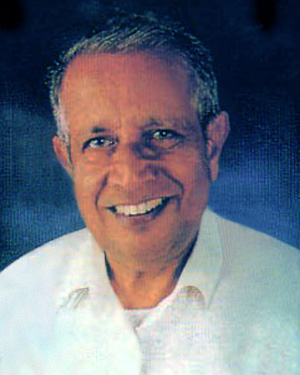
Rest in Peace Mr. J.B. Jeyaretnam - A True Singapore Lion

Rest in Peace JBJ

When I was little, back then in the early 1980s, I recall my parents speaking of Mr. Jeyaretnam in admiration. I also recalled in later years, my father telling the story of when he gave a lift to Mr. Jeyaretnam one day when he saw him walking in Tanjong Pagar. I did not understand then who he was, or why he was a figure of importance in our lives. After all, I never saw him, only heard of him.

My father, like the many other Singaporeans, respected Mr. Jeyaretnam for his honest idealism. And my father did the little he could that day when he gave Mr. Jeyaretnam a lift to his destination so as to show him that a Singaporean cared; people appreciated him knowing the full personal sacrifices he endured in order to pursue the political goals on behalf of Singaporeans.

Many years on, I finally understood why people so admired him. It's the David vs. Goliath pull that draws us all in awe and hope. We dare not articulate our own opinions for fear of the consequences, so we leave it up to someone else, and hope against hope that he somehow manages to break through. And when he doesn't, we remain silent choosing to gripe behind closed doors, or through pseudonyms on the Internet.

I have no personal stories of myself to tell of Mr. Jeyaretnam. The few times I saw him were at political rallies in 1997, and at a political forum - I think it was at NUS. Once I saw him selling his book along Orchard Road. I bought the book, shook his hand and thanked him for his political work. That was all I did to show that I cared - my miserable few bucks that went towards clearing his forced-upon bankruptcy debt.

I always believed that Singaporeans never much appreciated him for who he was. So I was heartened to read the Facebook comments in a group created in his memory. Many of the comments came from the younger generation, showing a willingness to think and articulate better on political issues than those of us from the previous generation. Maybe they are sick and tired of being told what's best for them; maybe money's not all-important any longer that they are willing to sacrifice their principles and freedom; maybe they they're no longer willing to self-censor; maybe they want a say in how their country develops.

This, I think, bodes well for the future of Singapore.

Here are some comments on JBJ's passing that I came across while surfing the Economist recently. Since these posters have articulated it much better than I could, I am re-posting some here....

"Singaporeans do not deserve someone like JBJ. The majority accepted a trade off, allowing a despot to run their lives in return for economic benefits. Does not matter if the majority are aware that the despot is self serving, conceals the truth, manipulates the elections system and MSM, influences the judiciary, abuses the ISA to intimidate citizens, appoint stooges in key positions. This begs the question, what kind of people will overlook such grotesque behavior in return for economic benefits ? JBJ never did and he stuck to his principles to the very end.
He was indeed a true Patriot."

"To conceive of what JBJ meant and how he connected with the ordinary Singapore, his son, Philip Jayaretnam cites why he always took public buses whenever possible, it was perhaps embarrassed that taxi drivers often refuse his fare. And to say he did little to dent PAP's power might be premature, like Che Guevara, his image more than his ideals will be the legacy that serve Singapore's civil rights progress."

"Singapore needs more brave souls like JBJ, but he was in the wrong place at the wrong time. I guess he'll be remembered as the heretic who preached democracy and rights while the rest of us were eating out of the PAP's hand. As for Lee Kuan Yew, he's a brilliant man, but nonetheless only human, and the demise of one of his fiercest political opponents should remind him that his time is drawing to an end, too."

"The epitaph should say "Here lies a man who fought for every Singaporean who has no spine of their own. One who stood up in face of hoodlooms, when eneryone else was ready to prostrate; one who spoke out when everyone else wagged; abd one who held the mirror when everyone else was singing paens to the Royal family." Dear Jeyaretnam! You were born amongst thankless spinessness people, would have loved to have you as one of my own countryman instead of seeing you getting wasted in Kingdom of Singapore."

Rest in peace JBJ. You will be missed.